Wedding Quiz on Guests' Phones: How to Run One That Works

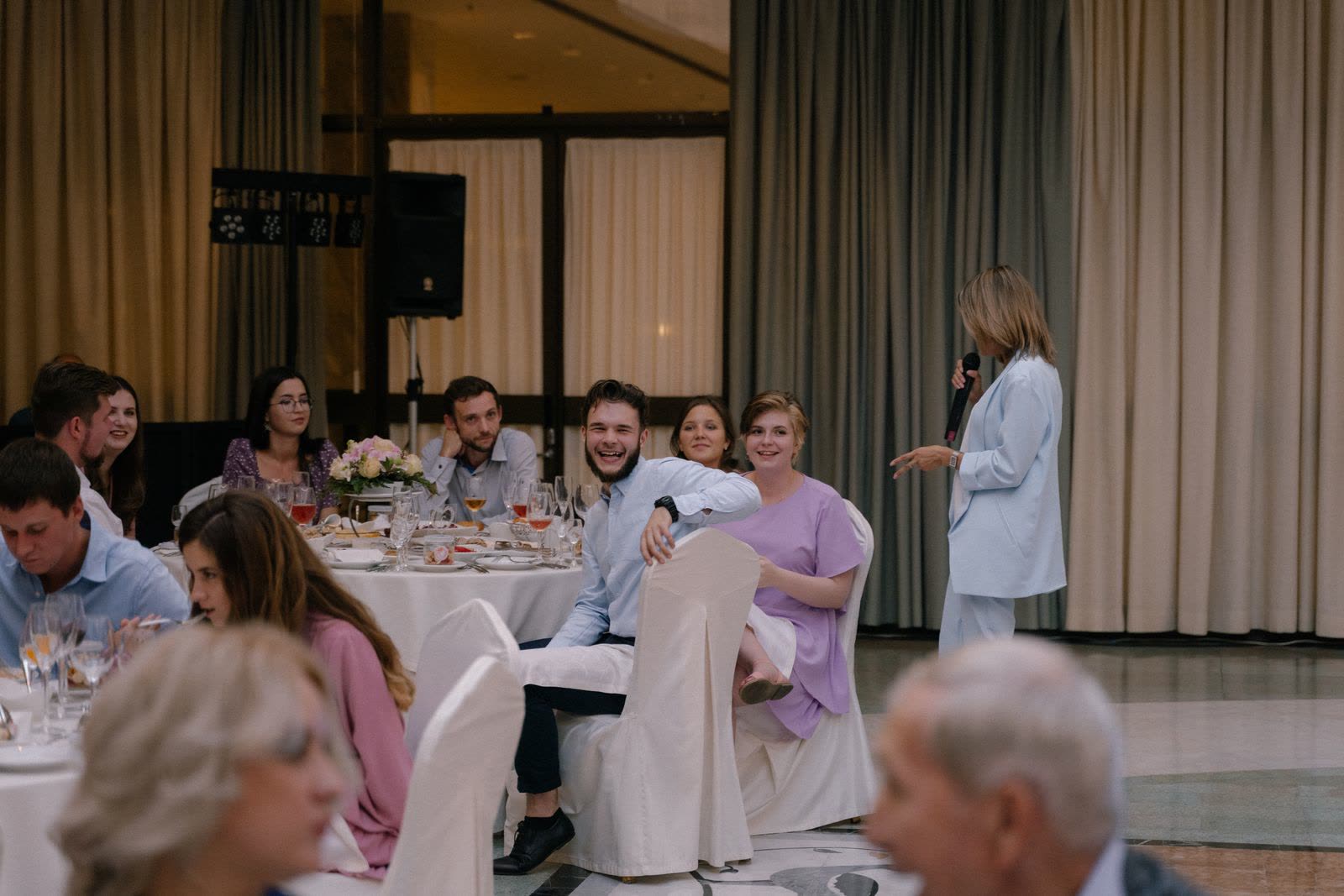
A wedding quiz on guests’ phones works best as 10 to 15 multiple-choice questions about the couple, opened from a link or a QR code, played in their own time during the drinks reception or between courses, with the winner read out before the evening starts. A live round, where a host reads each question and guests race to buzz in, is a different game with different rules. It needs the room’s attention for ten minutes, so it only belongs in a slot you have actually cleared for it.
Of all the wedding reception games guests can play on their phones, a quiz is the simplest to run, and most of what goes wrong with one has nothing to do with the questions. It is the slot it is put in, a free tool that stops letting people join at guest eleven, or a venue with one bar of signal. This guide covers those first, then the questions.
Two kinds of phone game, and which part of the day each suits
Almost every “wedding game on your phone” is one of two formats, and they are not interchangeable.
| Self-paced quiz | Live host-run round | |
|---|---|---|
| How it plays | Each guest answers at their own speed, whenever they open it | A host reads a question aloud, guests tap to answer or buzz in |
| Needs the room’s attention | No | Yes, for the whole round |
| Needs a host | No, just someone to announce the winner | Yes, confident with a microphone |
| Late arrivals and evening guests | Can join any time | Miss it if they arrive after |
| Best slot | Drinks reception, between courses, the evening lull | A cleared ten minutes, usually after the meal |
| What goes wrong | Nobody knows it exists | It runs over and eats the speeches or the first dance |
The self-paced quiz is the safer default because it asks nothing of the running order. It sits quietly on the event page, and people play it while they are waiting for something else anyway. The live round is the one that fills a room with noise, and the one that can go badly if the host is not up to it or the slot is too tight.
You can do both. A self-paced quiz for the day guests, then a short live round once the evening guests have arrived, is a good pattern for a UK wedding, where a second wave of evening guests arrives after the meal having missed the whole day.
Where a quiz fits in a UK wedding day
A British wedding day has three natural gaps in it, and a quiz belongs in one of them, not wedged between the set pieces.
| Slot | Typical length | What’s happening | Quiz fit |
|---|---|---|---|
| Drinks reception | 90 minutes to 2 hours | You are away having photos taken; guests are standing with a drink | Best slot for a self-paced quiz |
| Between courses | 10 to 20 minutes each | Guests are seated, waiting on the kitchen | Good for self-paced; too short for a live round |
| After the meal, before the evening | 30 to 60 minutes | Room turnaround, day guests at a loose end | Good for a short live round |
| Evening guests arriving | The first hour | New faces who missed the whole day | Self-paced quiz gives them something to join |
| Speeches, first dance, cake | Fixed | Everyone watching one thing | Never |
The drinks reception is the one that works hardest. It is the longest stretch of the day with nothing scheduled for guests, and the couple are often out of the room for most of it, which is exactly when a game about the couple gives people something to talk about. If you want the full order of events to plan around, our wedding reception timeline breaks it down hour by hour.
The one to avoid is the speeches. Some couples put the quiz “just before” them to warm the room up. In practice the answers and the arguing about answers are still going when the best man stands up.
How many questions, and how hard
Ten to fifteen. Much past that and the self-paced quiz gets abandoned halfway, and a live round overstays its welcome. Fifteen questions takes most guests five to ten minutes on their own, or about fifteen minutes read aloud.
The harder decision is difficulty. A quiz only about the couple’s private history is won by the best friend every time, and the couple’s great aunt gives up after three questions. Split it into three rough bands:
- Anyone could guess (about a third). Where did they get engaged? Which of them is always late? A guest who met the couple today has a fair chance.
- Friends and family know (about a third). Where was their first holiday together? What was the first film they saw?
- Only the inner circle (the rest). The name of a childhood pet, the band one of them saw at 14.
That mix keeps everyone in it until the end, and it means the winner is usually someone who knows the couple well but not always the same person.

Writing questions guests can actually answer
Multiple choice, always. On a phone, typing an answer is slow and marking free text is impossible. Three or four options is the sweet spot: two makes it a coin toss and six is a lot to read on a small screen.
| Question | Why it works |
|---|---|
| Who said “I love you” first? | Two obvious options plus “They both claim it was the other one” as a third |
| Where did they go on their first date? | Specific, true, and the wrong options can be funny |
| Which of them would survive longer on a desert island? | No right answer on paper, so the couple decide it, which is the point |
| How many countries have they been to together? | Numbers make good wrong answers: 6, 11, 17, 23 |
| What does one of them order at every single restaurant? | Everyone who has eaten with them knows; nobody else can guess |
What to leave out is more important than what to put in. Nothing about exes. Nothing that needs explaining to half the room. Nothing that would embarrass either of you in front of your grandparents, because they will be playing. And check every answer with each other, separately, before it goes live. More than one quiz has had its “correct” answer disputed, live, by half of the couple.
Running a live round without it dragging
A live round lives or dies on its host, so pick them deliberately rather than defaulting to the best man, who already has a speech to worry about. Whoever it is needs a microphone, a copy of the questions, and permission to move on when a question is not landing.
The mechanics that keep it tight:
- One question at a time, read twice. The room is noisy and half of it was not listening the first time.
- Open, then close. Guests can only answer or buzz while the host has opened the question, and it closes when the host says so. Anything else turns into a free-for-all.
- Read out the top three, not the whole list. Nobody needs to hear they came 43rd.
- Stop at ten questions even if you wrote fifteen. The last five can go in the self-paced version.
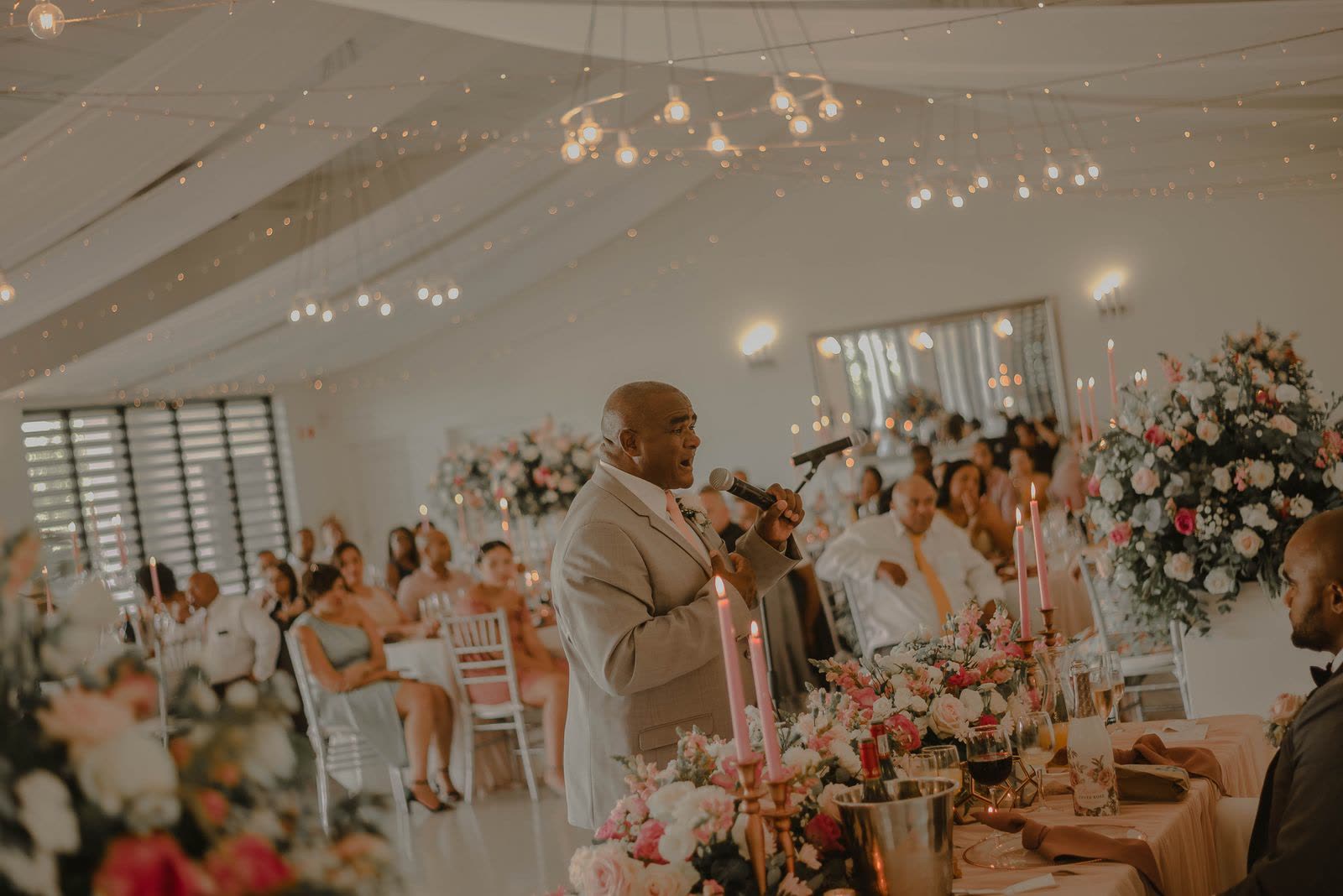
One honest limitation of any phone buzzer. “First” means the first buzz the system receives, not the first finger to touch the glass. A guest on one bar of signal can tap first and still be ranked second, because their buzz arrived later. On good wifi the gap is too small to matter. On a weak connection it is real, and it is worth the host knowing before someone at the back table swears they were first.
Signal, and the free-tier trap
The two things most likely to end a phone quiz before it starts are both checkable in advance.
Signal. Barns, castles and country houses, which is to say a large share of UK wedding venues, are often thick-walled and rural. Stand in the room where the quiz will happen, on the day you visit, and open a web page on your own phone. If it crawls, ask the venue for the guest wifi details and put them on the table next to the QR code. The same test applies to anything else guests will open on the day, which our wedding playlist guide goes into for music.
Free tiers. The quiz tools most guides recommend were built for classrooms and offices, and their free plans cap how many people can play. The published limits, checked September 2026:
| Tool | Free plan limit |
|---|---|
| Kahoot! (free “Go” plan) | Up to 10 participants |
| AhaSlides | Up to 50 participants, and 5 quiz questions per presentation |
| Mentimeter | 50 participants per month |
For a wedding of 80 to 120 guests, every one of those means a paid plan, and in AhaSlides’ case a free quiz stops at question five. None of that is a reason to avoid them. It is a reason to check the limit against your guest count before you have written the questions into one, rather than discovering it at the drinks reception.
Scores, prizes and who sees the leaderboard
Decide before the day whether guests see the scores, because it changes the feel of the game. A public leaderboard makes the competitive tables very happy. It also shows the whole room that one of the mums came last.
A sensible default is to keep the full results private to you and announce only the winner, or the top three. If your crowd is competitive and would rather see where they stand, open it up. Either way, decide how ties are broken before anyone asks: fastest to finish is the usual rule, and it is easier to state in advance than to invent at 6pm with two claimants.
Prizes do not need to be expensive to work. A bottle of fizz for the winner, first pick of the table centrepiece, or the right to choose one song for the evening playlist all go down well. The song is the best of the three, because the whole room hears the prize being claimed.
Setting it up in ShareWithGuests
Fun & Games has both formats. The quiz is self-paced: you write the questions (two to six options each) in the dashboard, guests open it from the event page, enter their name once, and play. Each guest gets one go, answers are scored on our side rather than on their phone, and the leaderboard is visible only to you until you choose to make it public. Ties go to whoever finished first.
The live buzzer is the host-run version. The host runs it from the dashboard on a phone, with one button that cycles through opening the round, locking the board and moving to the next round, and the board shows the first three or four guests to buzz in with the gap between them. On phones that support it, guests’ screens stay awake while it is running, so nobody’s phone locks mid-round.
Both open in the phone’s browser from the same link or QR code as the rest of the event page, with nothing to install.
Quick answers
How many questions should a wedding quiz have? Ten to fifteen. That takes most guests five to ten minutes to play on their own, or about fifteen minutes read aloud.
When is the best time for a wedding quiz? The drinks reception, while you are having photos taken. Never during the speeches or first dance.
Do guests need an app to play a quiz on their phones? Not with a browser-based tool. They open a link or scan a QR code, and it plays in the phone’s browser.
Is Kahoot free for a wedding? Only for very small ones. Its free plan allows up to 10 participants (checked September 2026), so a typical wedding needs a paid plan.
Should the quiz leaderboard be public? Usually not in full. Announce the winner or top three and keep the rest private.
What makes a good wedding quiz question? Multiple choice with three or four options, a true answer both of you agree on, and nothing about exes.
The checklist
| When | Do this |
|---|---|
| 8 weeks out | Pick the format: self-paced, live, or both |
| 8 weeks out | Choose the slot in the running order and tell the venue coordinator |
| 6 weeks out | Check your quiz tool’s player limit against your guest count |
| 4 weeks out | Write 15 questions: a third anyone could guess, a third for friends, the rest for the inner circle |
| 4 weeks out | Check every answer with each other, separately |
| At the venue visit | Open a web page on your phone in the room the quiz will be in |
| 2 weeks out | Brief the host, if there is a live round, and agree where it stops |
| 2 weeks out | Decide who sees the leaderboard and how ties are broken |
| Week of | Put the QR code on the tables with the wifi details if signal is weak |
| On the day | Announce it at the start of the drinks reception, and the winner before the evening |