Wedding Reception Timeline: Order of Events, Hour by Hour

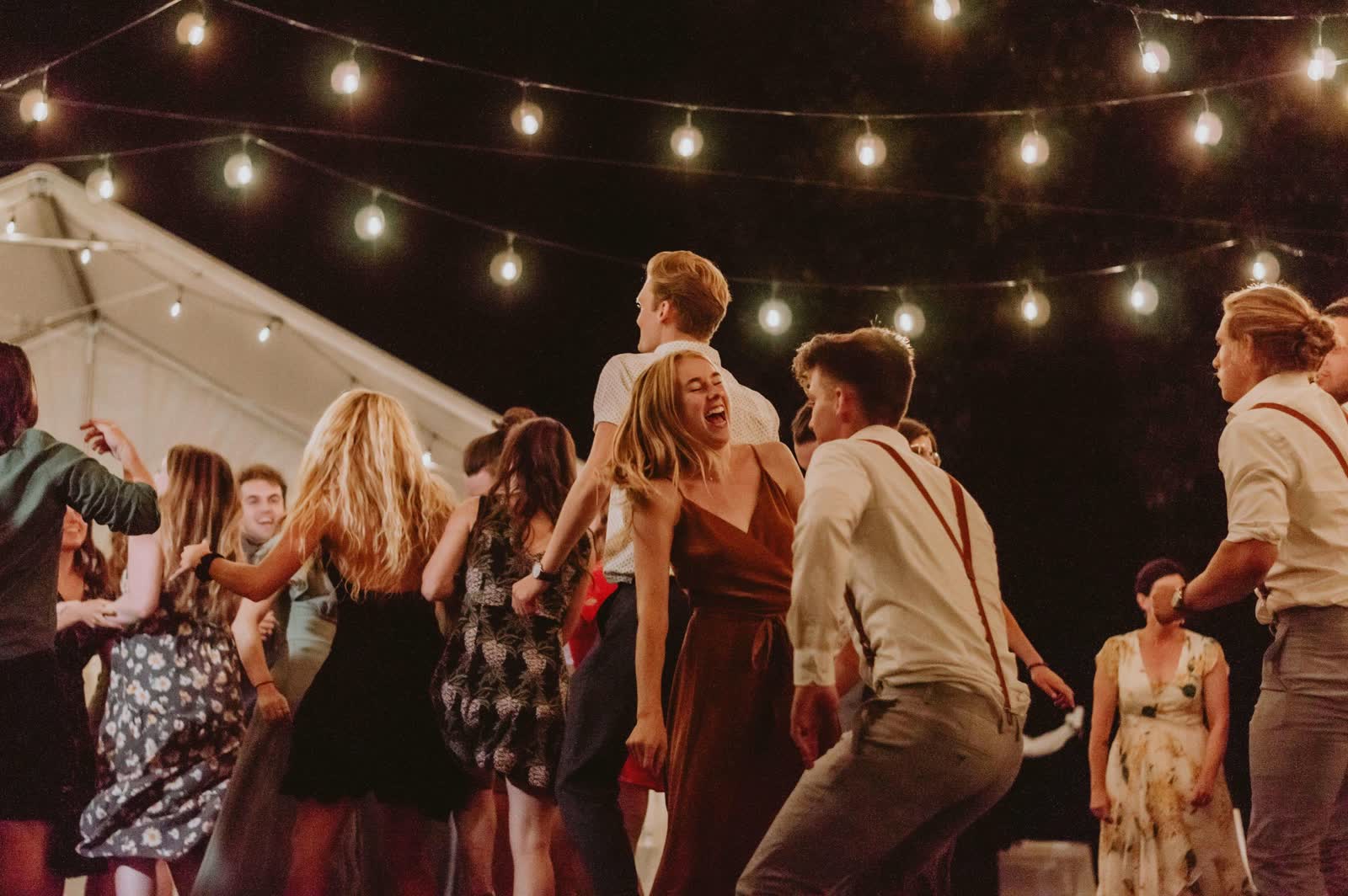
A standard wedding reception timeline runs four to five hours: one hour of cocktails, about half an hour of entrances and first dance, ninety minutes for dinner and toasts, then roughly two hours of dancing, closing with a last dance and send-off. Almost every reception follows that same skeleton. What separates a smooth evening from a chaotic one isn’t the order of events, it’s the buffer time between them and whether your guests ever know what’s happening next.
This guide gives you the order of events in full, an hour-by-hour sample schedule, separate block timings for 3, 4, 5 and 6 hour receptions, and how to adapt any of them for a brunch wedding, a ceremony in the same room, a cocktail-style reception, a no-dancing crowd, or a guest list of 200.
The order of events at a wedding reception
Before the clock times, the sequence. Nearly every reception in the US, UK and Ireland runs these events in this order, whether it’s three hours or six. Planners in the UK and Ireland usually call it the running order; the events are the same.
- Cocktail hour (60 minutes): guests arrive, drink, and eat something while the couple finishes photos.
- Guests take their seats (10 to 15 minutes): the transition that most often runs late.
- Grand entrance (5 to 10 minutes): wedding party first, then the couple.
- First dance (3 to 5 minutes): strongest while the whole room is still seated and watching.
- Welcome speech (2 minutes): one host or parent, then straight into dinner.
- First course (20 to 25 minutes).
- Toasts (15 to 20 minutes): traditionally best man, then maid of honour, between courses.
- Main course (35 to 45 minutes).
- Cake cutting (10 minutes): guests read this as the polite-to-leave signal, so its placement matters.
- Parent dances (5 to 10 minutes): the bridge to the dance floor.
- Open dancing (90 to 150 minutes): the block that absorbs every overrun elsewhere.
- Late-night snack (served about 90 minutes into dancing).
- Last dance (5 minutes): announced as the last dance, not a fade-out.
- Send-off (10 minutes).
Two things about that list are worth saying out loud, because most order-of-events guides leave them implicit.
The first is that the order is a chain of handoffs, not a checklist. Each moment exists partly to pass the room’s energy to the next one, which is why entrance into first dance into welcome works and why splitting them up doesn’t. The second is that only two items have genuinely fixed positions: dinner service, which your caterer sets, and the cake cutting, which sends a social signal you have to place deliberately. Everything else can move.
The sample reception schedule at a glance
This is a classic five-and-a-half-hour evening reception starting after a late-afternoon ceremony. Steal it as-is, then adjust with the variations further down.
| Time | What’s happening |
|---|---|
| 5:00 PM | Cocktail hour begins |
| 6:00 PM | Guests move into the reception space and find their tables |
| 6:15 PM | Wedding party and couple’s grand entrance |
| 6:25 PM | First dance |
| 6:30 PM | Welcome speech, first course served |
| 7:00 PM | Toasts between courses |
| 7:20 PM | Main course served |
| 8:00 PM | Cake cutting |
| 8:10 PM | Parent dances |
| 8:20 PM | Dance floor opens |
| 9:45 PM | Late-night snack or dessert table |
| 10:20 PM | Last dance |
| 10:30 PM | Send-off |
Two rules make this timeline work in real life:
- Build in buffers. Every transition takes longer than you think. Moving 120 people from a cocktail terrace to their dinner seats is a 15-minute operation, not a 5-minute one. The timeline above already includes that slack; if you compress it on paper, the evening will stretch it back out for you, and the thing that gets cut is always dance time.
- Anchor around dinner service. Your caterer physically cannot hold plated food for 40 minutes because toasts ran long. Set the dinner window with them first, then arrange everything else around it.
Cocktail hour: 5:00 to 6:00 PM
Cocktail hour exists to absorb chaos. Photos run long, the shuttle is late, the venue needs to flip the ceremony space: the cocktail hour soaks all of it up while your guests are happily occupied with drinks and appetizers.
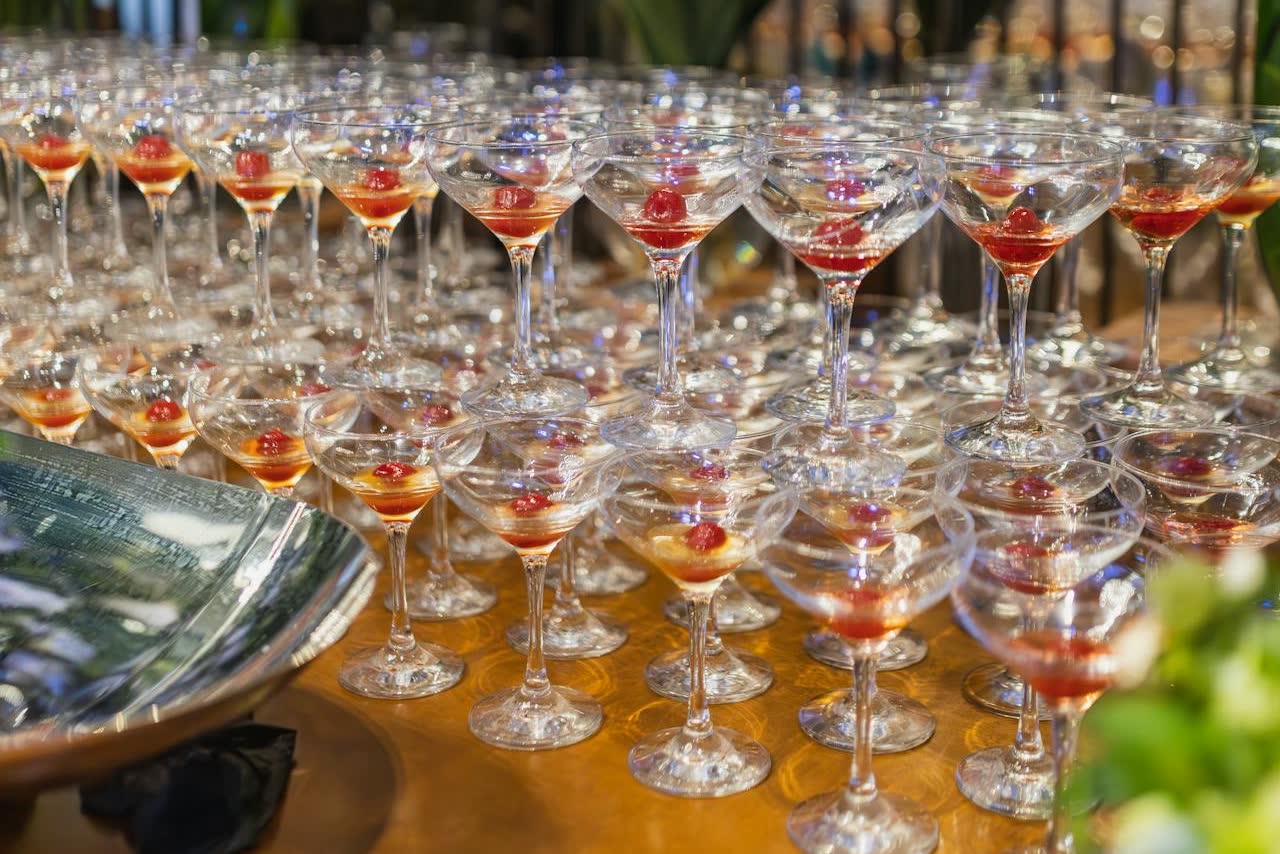
From your guests’ side, this is the most social, least structured part of the evening. From your side, a few things keep it on track:
- Keep it to one hour. At 75 minutes, guests start looking for their seats. At 90, the energy you want for your entrance has evaporated and the bar has done too much of its job.
- Feed people, even lightly. A drink on an empty stomach at 5:00 PM makes for a rough 9:00 PM. Passed appetizers or a grazing table both work.
- If you’re doing a receiving line or table visits later, skip them now. You’ll lose your only flexible hour to hugs you could distribute across dinner instead.
- Start collecting photos now. Guests take more candids at cocktail hour than at any point before dancing. If you’re gathering everyone’s photos in one place, put the instructions where guests already are, on bar signs or cocktail napkins. A QR code on the welcome sign means the photo stream is already flowing before dinner.
- This is when the guest book gets signed. Guests have a free hand and nothing scheduled, which is the only combination that produces real entries; after dinner they’re seated, and after dancing they’re not writing anything legible. Put it near the bar, and put one prompt on the first page rather than leaving it blank, for the reason set out in what to write in a wedding guest book.
Grand entrance and first dance: 6:00 to 6:30 PM
Budget the full first 15 minutes just for getting guests seated. Nobody moves quickly holding a gin and tonic.
Once everyone’s down, momentum matters. The strongest opening sequence is entrance, straight into first dance, straight into the welcome. Each handoff that happens without a pause keeps the room’s attention exactly where you want it.
- Grand entrance (5 to 10 minutes). Keep introductions short. Announcing all 12 members of the wedding party individually with walk-up songs reads as fun on paper and drags in the room after couple number three.
- First dance (3 to 5 minutes). Doing it now, while every guest is seated and looking at the dance floor, beats doing it at 8:00 PM when half the room is mid-conversation. Some couples cut the song to 90 seconds; no guest has ever complained.
- Welcome (2 minutes, one person). One host or parent welcomes everyone and invites the room to dinner. Save the real toasts for between courses.
Dinner and toasts: 6:30 to 8:00 PM
Dinner is the longest fixed block in the reception schedule and the one your other vendors plan around. Get the mechanics right and the whole evening feels effortless.
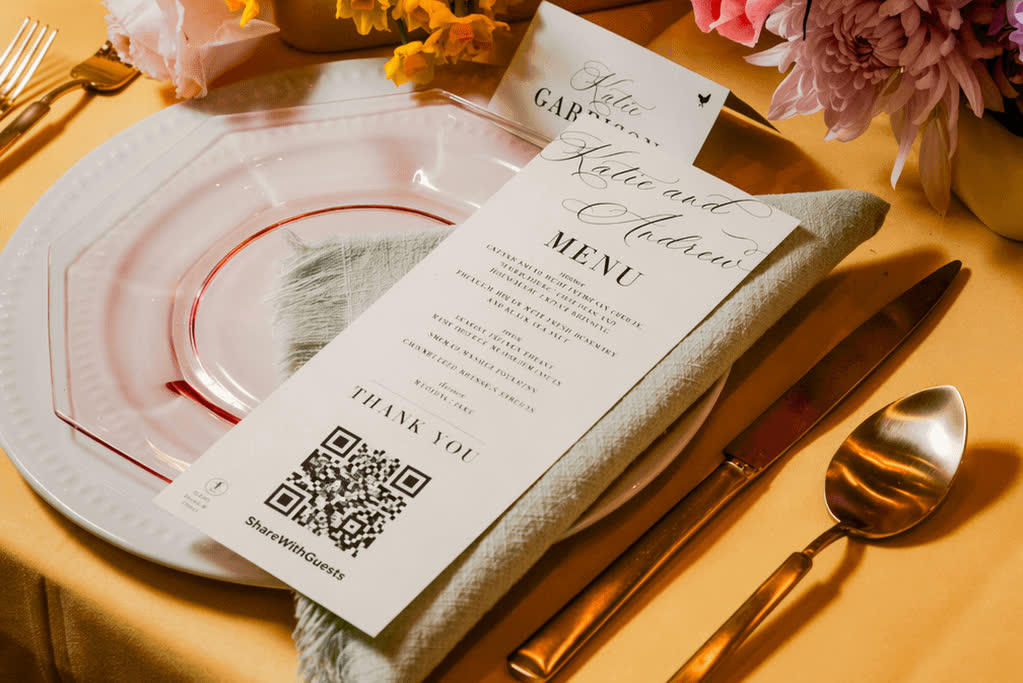
Slot toasts between courses, not before food. A hungry room is a restless room. The traditional order per The Knot’s reception guide puts the best man and maid of honor between the first course and the main, and it works because guests have food in front of them and a natural pause in conversation.
A few timing rules that save the block:
- Cap speeches at three, five minutes each. Every toast past the third halves the room’s attention. Anyone else who wants to speak can do it at the rehearsal dinner, where long stories actually land.
- Know your service style’s real duration. A plated dinner for 120 takes about 75 to 90 minutes. A buffet takes longer than couples expect: 100+ guests through a double-sided buffet line is 30 to 40 minutes before anyone counts eating time. Family style is the fastest of the three and gets tables talking.
- Use dinner for table visits. If you want to greet every table, do it while guests are seated and stationary. Two efficient laps during main course beats chasing people around the dance floor later.
- Feed your vendors when you eat. A photographer eating at 6:45 is back shooting by 7:15, in time for toasts and cake. A photographer fed at 8:00 misses both.
Cake cutting and parent dances: 8:00 to 8:20 PM
Cake timing is secretly one of the most strategic decisions in the whole timeline, because guests read it as a signal. Etiquette has long held that the cake cutting marks the point after which leaving isn’t rude, and older guests in particular will act on it.
Cut the cake too early and you’ve told a third of the room the exits are open before the dancing starts. Cut it too late and grandparents who need to leave feel stuck. Right after dinner, just before the dance floor opens, threads the needle: everyone sees it, nobody’s trapped, and the people leaving at 8:30 depart having watched every major moment.
The parent dances follow naturally. Two songs, sometimes shortened to ninety seconds each, and they act as the bridge that pulls everyone’s attention to the dance floor right before it opens for real.
Open dancing: 8:20 to 10:20 PM
Two hours of open floor, as in the schedule above, is the sweet spot. One hour feels cut short; three hours is more than most crowds can sustain.
What actually keeps a dance floor full isn’t more time, it’s fewer interruptions and the right music. Every announcement, bouquet toss, or slideshow that stops the music resets the floor to zero, and it takes two or three songs to rebuild. If you’re doing a bouquet toss or anniversary dance, stack them together in one short break around 9:15 rather than sprinkling stoppages across the night. We’ve written a full guide to building a wedding playlist your guests will actually dance to, including how to handle guest requests without losing control of the vibe.
One more scheduled moment worth protecting: a late-night snack around 9:45. Fries, sliders, or pizza after ninety minutes of dancing is the single most remembered catering decision at most weddings, and it re-energizes the floor for the final stretch.
Last dance and send-off: 10:20 to 10:30 PM
End on a chosen note instead of a fade-out. A designated last dance, announced as the last dance, gives the night a real ending: either a big singalong with everyone on the floor or a quiet final song for just the two of you while guests line up outside for the send-off.
If you’re doing a sparkler or bubble exit, have someone hand out supplies during the final two songs, not after the music stops. The gap between “last dance ends” and “couple walks out” should be under ten minutes, because nothing kills a send-off like 80 guests standing in a parking lot waiting.
If there’s an after-party, announce the location once at the last dance and put it on the guest-facing schedule. You do not want to be repeating an address to 40 people individually while wearing a wedding dress.
Reception timelines by length: 3, 4, 5 and 6 hours
Most venues sell you a fixed window, so the practical question isn’t “how long should a reception be,” it’s “what do I cut.” There’s no single convention to fall back on either: Zola’s template runs four hours, The Knot’s runs five, and both are fine. Your venue’s contract decides this, not tradition. Here’s how the same seven blocks divide across the four common lengths. Each column sums to exactly its window.
| Block | 3-hour | 4-hour | 5-hour | 6-hour |
|---|---|---|---|---|
| Cocktail hour | 30 min | 45 min | 60 min | 60 min |
| Guests take their seats | 10 min | 10 min | 15 min | 15 min |
| Entrance, first dance, welcome | 10 min | 15 min | 15 min | 20 min |
| Dinner + toasts | 60 min | 75 min | 90 min | 105 min |
| Cake + parent dances | 10 min | 15 min | 20 min | 20 min |
| Open dancing | 50 min | 70 min | 90 min | 130 min |
| Last dance + send-off | 10 min | 10 min | 10 min | 10 min |
| Total | 180 min | 240 min | 300 min | 360 min |
The pattern to notice: dinner barely moves. It stretches only 45 minutes across a window that doubles, because feeding 120 people has a floor you can’t negotiate. The last dance and send-off don’t move at all, because a ritual takes as long as it takes. Dancing does nearly all the flexing, from 50 minutes to 130. That’s the real tradeoff every reception length comes down to.
The 3-hour reception
Three hours only works if you give something up on purpose. The usual choice is a plated or family-style meal instead of a buffet, two speeches instead of four, and cake cutting folded into the parent dances as one 10-minute block. Do not try to run a full traditional order of events in three hours by shaving five minutes off each item; you’ll simply finish 25 minutes late with no dancing. Cut whole items instead.
Note what the 3-hour column does to the seating transition: it holds at 10 minutes, the same as the 4-hour version. That’s not an oversight. Moving a room full of people is the one thing that doesn’t get faster because your reception is shorter.
The 4-hour reception
This is the most common venue window in the US and the tightest one that still feels complete. Everything from the standard order of events fits, but the buffers don’t. Skip the late-night snack, hold speeches to two at four minutes, and be ruthless about the seating transition. If your ceremony is on site, starting cocktail hour while photos happen buys back the 15 minutes that makes a 4-hour reception feel unhurried instead of clipped.
The 5-hour reception
Five hours is the sweet spot, and it’s a light trim of the schedule at the top of this page. That one runs five and a half hours, so to fit a straight five-hour window, take the extra 30 minutes out of the dance block and nothing else: dancing ends at 9:50, last dance at 9:50, send-off at 10:00, and the rest of the evening is untouched.
What the fifth hour actually buys you isn’t the dancing, it’s the slack. You can afford a genuine 15-minute seating transition instead of hustling 120 people through it in eight, and when the toasts run seven minutes long, which they will, it costs you nothing you’ll notice. That’s the difference between a schedule that survives contact with a real evening and one that doesn’t.
The 6-hour reception
With six hours the risk inverts: instead of running out of time, you run out of energy. Almost nobody dances for 130 straight minutes. Spend the extra hour on the front or middle rather than the end. Extend cocktail hour with real food stations, add a course, schedule a genuine intermission around the late-night snack with the music down and seating available, or programme something that isn’t dancing (a live act, a game, a dessert bar) into the back half. A six-hour window filled with six hours of the same thing empties the room by hour five.
Ceremony and reception in the same room
If your ceremony and reception share a space, the room flip is the single biggest timing constraint of your day, and it’s the one most sample timelines ignore entirely.
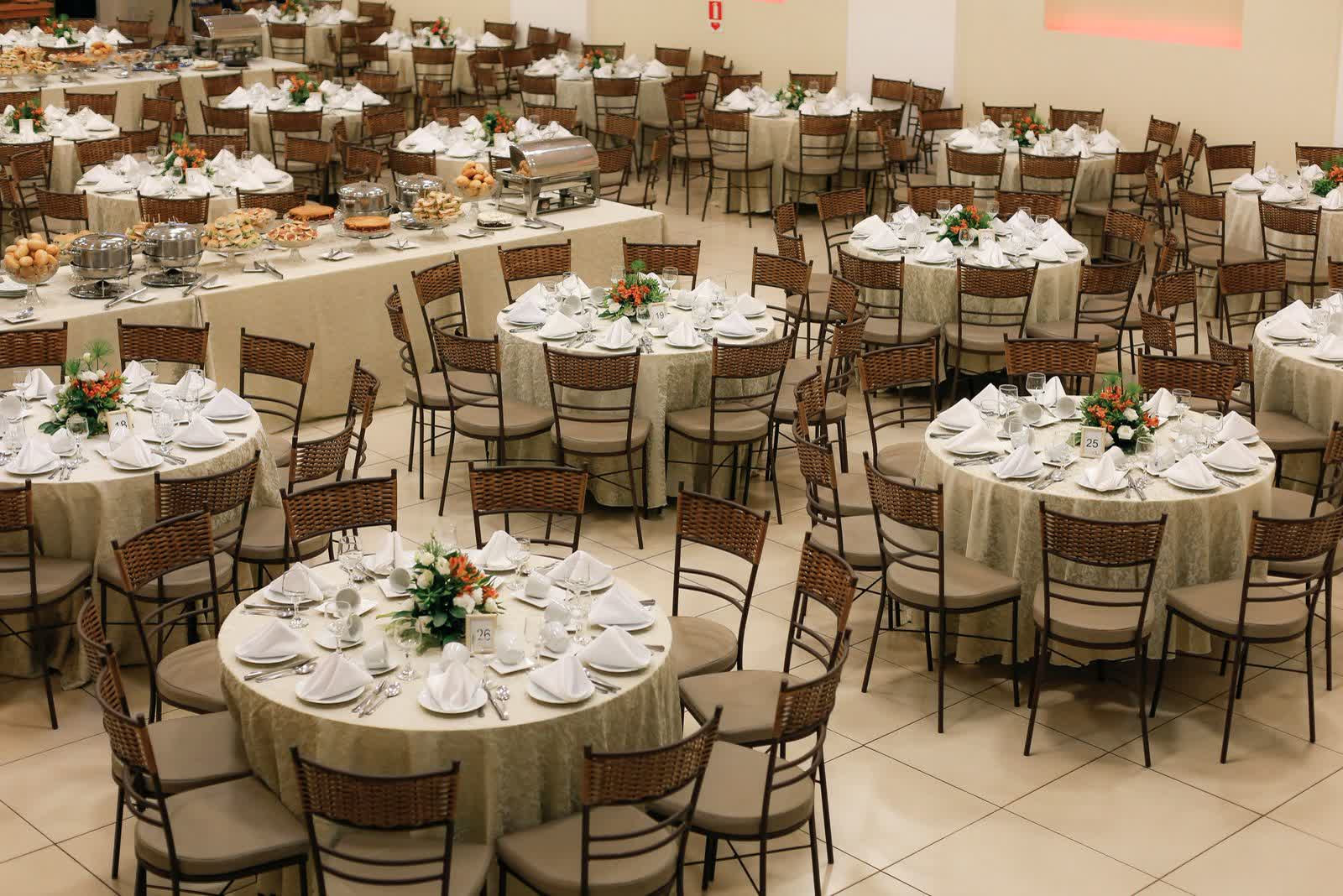
Budget 45 to 60 minutes for a full flip: clearing and restacking ceremony chairs, setting round tables, laying place settings, moving florals from the aisle to the centrepieces. Ask your venue for their actual number rather than assuming, because it depends on staffing more than square footage, and a venue turning a room with four staff instead of eight takes twice as long.
Three things make it work:
- Guests have to be somewhere else. A cocktail hour in a different room, a terrace, a garden, or a lobby is not optional, it’s the flip. If there’s genuinely no second space, a “post-ceremony photo session” outdoors or a shuttle to a nearby spot can buy the same window, but you need a plan before the day.
- Florals get reused deliberately, not opportunistically. Tell your florist in advance which ceremony arrangements move where, and who moves them. “The venue will sort it” is how aisle arrangements end up in a hallway.
- Your entrance covers the reveal. Guests re-entering a transformed room is a real moment. Hold them until the room is fully done, then bring them in and go straight into the grand entrance rather than letting them trickle back and watch staff finish.
The knock-on effect on the rest of your schedule is simple: a same-room wedding pushes dinner about 30 minutes later than an equivalent two-space wedding, so work backwards from your venue’s hard end time and accept a shorter dance block, or start the ceremony earlier.
How to adjust the timeline for your wedding
The five-hour evening template above assumes a late-afternoon ceremony, a seated dinner, and a crowd that dances. Change any of those and the schedule shifts more than couples expect.
| Variation | What changes |
|---|---|
| Brunch or daytime wedding | Swap cocktail hour for a 45-minute mimosa-and-coffee reception, run a 60-minute meal, and replace the two-hour dance block with lawn games, live acoustic music, or a photo activity. Daytime crowds rarely dance; plan for connection instead of a floor. |
| Cocktail-style reception (no seated dinner) | Without a seated meal you lose the structure dinner provides, so add it back deliberately. Space three anchored moments (entrance and first dance, toasts, cake) roughly 45 minutes apart, keep food arriving continuously rather than in one wave, and provide seating for at least half your guests even though nobody’s assigned a chair. Standing receptions feel shorter than they are: three hours is usually plenty. |
| Evening reception with extra guests joining | Common in the UK and Ireland, where a smaller group attends the ceremony and dinner and a larger group arrives afterwards. Set the evening guests’ arrival 15 minutes after speeches are due to end, not when they’re scheduled to end, then open with cake cutting and the first dance so arriving guests immediately see something happen rather than walking into a room mid-lull. |
| No-dancing reception | Fill the back half with structured moments spaced 20 to 30 minutes apart: extended toasts, a newlywed trivia game, table-by-table photo prompts, a dessert tasting. Without scheduled beats, a danceless reception goes quiet by 8:30. |
| 150+ guests | Add 10 minutes to every transition and 20 to dinner service. Big rooms move slowly: seating, buffets, and table visits all scale with headcount. A 200-person wedding on a 120-person timeline runs 45 minutes behind by cake. |
| Under 60 guests | Compress transitions to almost nothing and reclaim 30 to 45 minutes. Small weddings can also reorder freely, like toasts during dessert at one long table, because you can literally tell everyone the plan in one sentence. |
Keeping guests on the schedule you built
Here’s the part most timeline guides skip: the schedule only works if guests know it. You can build a perfect evening and still have half the room at the bar during the parent dances because nobody knew they were happening.
Printed programs solve this for about an hour, which is roughly how long guests hold onto them. The more durable option is putting the schedule somewhere guests already are, which in 2026 means their phones. A shared event page with the day’s timeline lets anyone check what’s next without asking, and it quietly answers the three questions every guest asks all night: what’s happening now, what’s at what time, and where do I go.
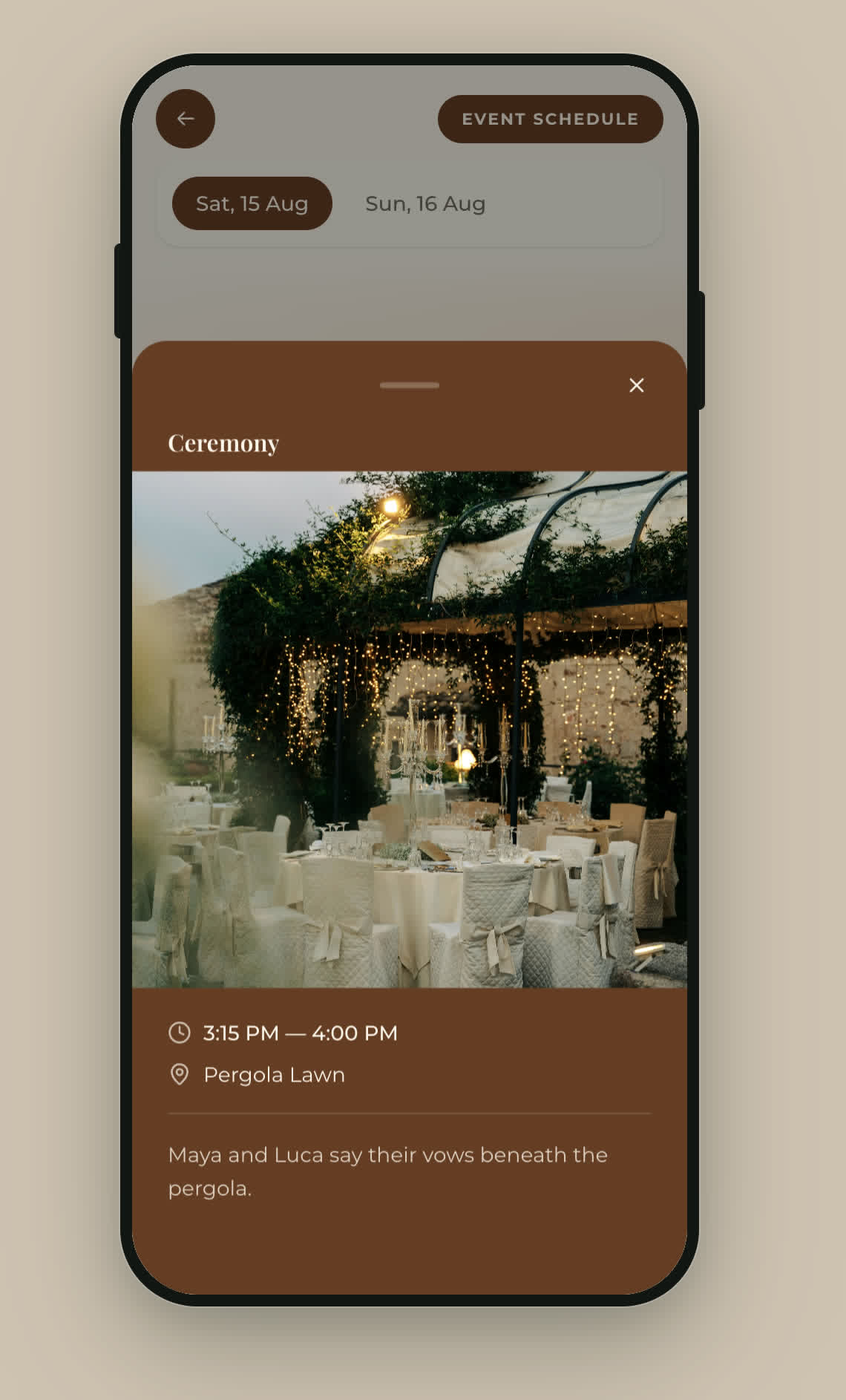
The same logic applies to physical navigation. Guests who can find their table without queuing at a seating chart easel get seated in half the time, which is exactly the transition where most timelines first fall behind.
However you share it, share a slightly simplified version. Guests need “8:00 cake, 8:20 dancing,” not your vendor-facing spreadsheet with load-out times. Keep the detailed one for your planner, DJ, caterer, and photographer, and make sure all four have the same copy: the most common day-of timeline failure isn’t a late vendor, it’s two vendors working from different drafts.
Quick answers
How long should a wedding reception be? Four to five hours is standard. Under four feels rushed for a full dinner-and-dancing format; past five, energy drops faster than most couples expect. If your venue offers a longer window, spend it on cocktail hour, not extra dance time.
What is the traditional order of events at a wedding reception? Cocktail hour, grand entrance, first dance, dinner with toasts between courses, cake cutting, parent dances, open dancing, last dance, send-off. Couples reorder freely, but this sequence exists because each moment hands energy to the next.
When should we cut the cake? Right after dinner, just before the dance floor opens, typically around 8:00 PM at an evening reception. Guests read the cake cutting as the polite-to-leave signal, so cutting it early drains your dance floor and cutting it very late strands guests who need to go.
Who gives toasts and in what order? Traditionally the best man and maid of honor speak between dinner courses, with a parent or host giving a short welcome at the start of dinner. The couple can say a brief thank-you before dessert. Keep it to about three speeches of five minutes or less.
How much buffer time should a reception timeline have? Add 10 to 15 minutes to every transition between spaces or activities, and about 20 extra minutes to dinner service for every 50 guests over 100. If the padded version doesn’t fit your venue window, cut an activity rather than the padding.
What does a 5 hour wedding reception timeline look like? One hour of cocktails, 15 minutes to get guests seated, 15 minutes for the entrance, first dance and welcome, 90 minutes for dinner with toasts between courses, 20 minutes for cake and parent dances, 90 minutes of open dancing with a late-night snack partway through, then 10 minutes for the last dance and send-off.
What’s the difference between a 4-hour and a 5-hour reception? The extra hour spreads out rather than going all to dancing: 15 more minutes each on cocktail hour and dinner, 20 more on the dance floor, plus five more on the seating transition and five on cake and parent dances. Those small additions are the buffers, and they’re what stop a long toast from eating into the dancing.
How long does it take to flip a room from ceremony to reception? Plan on 45 to 60 minutes, and confirm the number with your venue rather than assuming, since it depends on how many staff they put on the turn. Guests need somewhere else to be for that whole window, which is what cocktail hour is for at a same-room wedding.
The one-page version
| ✓ | Decision |
|---|---|
| ☐ | Confirm your venue’s hard end time and work backwards from it |
| ☐ | Pick your reception length (3, 4, 5 or 6 hours) and divide the blocks accordingly |
| ☐ | If the ceremony is in the same room, get the venue’s real flip time in writing |
| ☐ | Set the dinner service window with your caterer before scheduling anything else |
| ☐ | Keep cocktail hour to 60 minutes, with food |
| ☐ | Run entrance, first dance, and welcome as one continuous sequence |
| ☐ | Cap toasts at three, slotted between courses |
| ☐ | Cut cake right after dinner, then parent dances, then open the floor |
| ☐ | Protect two hours of dancing and stack any interruptions into one break |
| ☐ | Schedule a late-night snack about 90 minutes into dancing |
| ☐ | Pick a real last dance and prep the send-off during it |
| ☐ | Share a simplified timeline with guests, and one identical detailed version with every vendor |
Build the skeleton, pad the joints, tell people the plan. That’s the whole trick. The couples who enjoy their own reception most aren’t the ones with the most elaborate schedule, they’re the ones who decided in advance where the slack lives, so that when the toasts run seven minutes long, and they will, nobody has to take it out of the dance floor.