Wedding Seating Plan Etiquette: Who Sits Where, and the Awkward Cases

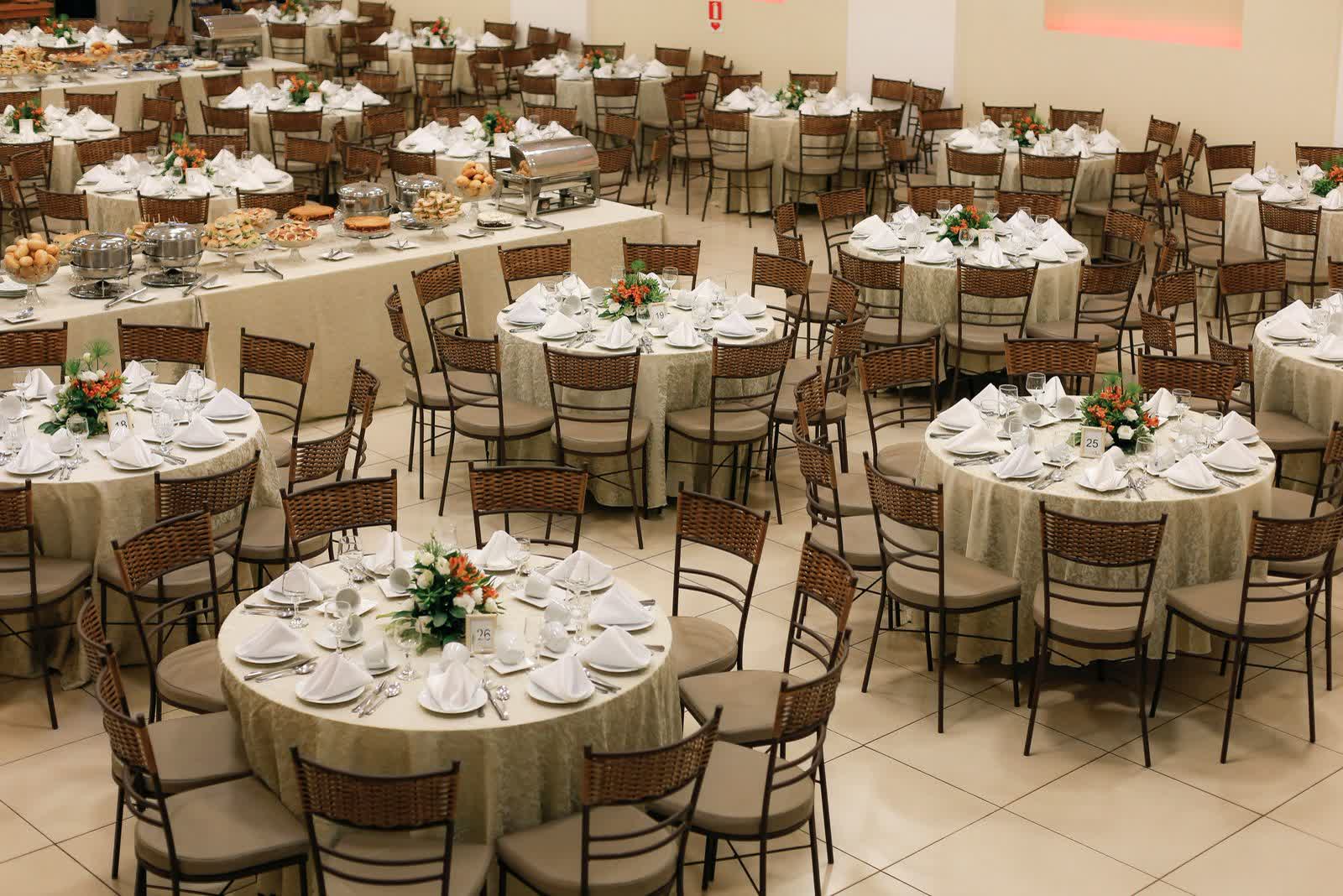
Seat the people who are hardest to place first, and let everyone else fill in around them. Start with the top table and any parents or relatives who cannot sit near each other, then place the fixed groups (couples, families, children), and only then spread friends and colleagues to balance the tables. Most seating plan stress comes from doing it in the opposite order.
Etiquette here is mostly judgement, and the sources that cover it agree on very little beyond “it depends on your family”. This guide gives you a default for each situation, the reasoning, and what to say when someone objects.
Decide whether you need a plan at all
Bridebook’s UK guide says a seating plan is worth having from around 30 guests and not essential below that (Bridebook, checked October 2026). Under 30, a single long table or open seating usually works, and you avoid the politics entirely.
Past that, no plan means guests wander the room holding a plate of cold food while the couple’s friends take the tables nearest the bar. A plan is a kindness to the shy, the elderly and anyone who arrives alone.
The top table: four layouts
| Layout | How it works | Best when |
|---|---|---|
| Traditional long table | Immediate family and wedding party in a row, facing the room | Parents are together, on good terms, and the group is small |
| Sweetheart table | The couple alone, the wedding party at ordinary tables | You want to skip top-table politics, or the venue is small |
| Split or family tables | A table for each side, or for each parent, placed close to the couple | Divorced or remarried parents, or families that are large |
| No top table | The couple sit in the middle of the room among guests | Informal weddings, or when nobody wants to be on show |
Bridebook describes the traditional order as a long table in view of the room, running chief bridesmaid, groom’s father, bride’s mother, groom, bride, bride’s father, groom’s mother, best man, and says to adapt it to your family. The point of the layout is that every parent has a place of equal standing. If the traditional row would put someone in an uncomfortable spot, that is the signal to change the layout, not to squeeze the people.
Divorced and remarried parents
There is no rule, only a choice that follows how the parents get on.
- They get on: seat them on the same top table, each next to their new partner if there is one. Nobody should be the odd one out beside the couple.
- They are civil but cool: give each parent their own table close to the couple, hosted by them, with their partner and the relatives they are comfortable with. Bridebook suggests this arrangement, and Dotty About Paper calls the related idea an honoured guests table, where step-parents, partners and close friends sit prominently near the top (Dotty About Paper, checked October 2026).
- They cannot be in the same space for long: use two tables of equal prominence, or a buffer table of people who are warm to both sides between them. The equal part matters more than the distance. Guests notice a “good table” and a “bad table”.
Ask the parents where they would be comfortable before you draw anything, rather than showing them a finished plan. A short message does it:
We’re putting the plan together. Would you rather sit at a table with us, or with [relatives or friends you’d like]? Tell us who you’d love beside you and anyone you’d rather not be next to, and we’ll work around it.
New partners are the group people forget. A stepmother placed on a side table while the first wife sits at the top table is the version that gets remembered for years.
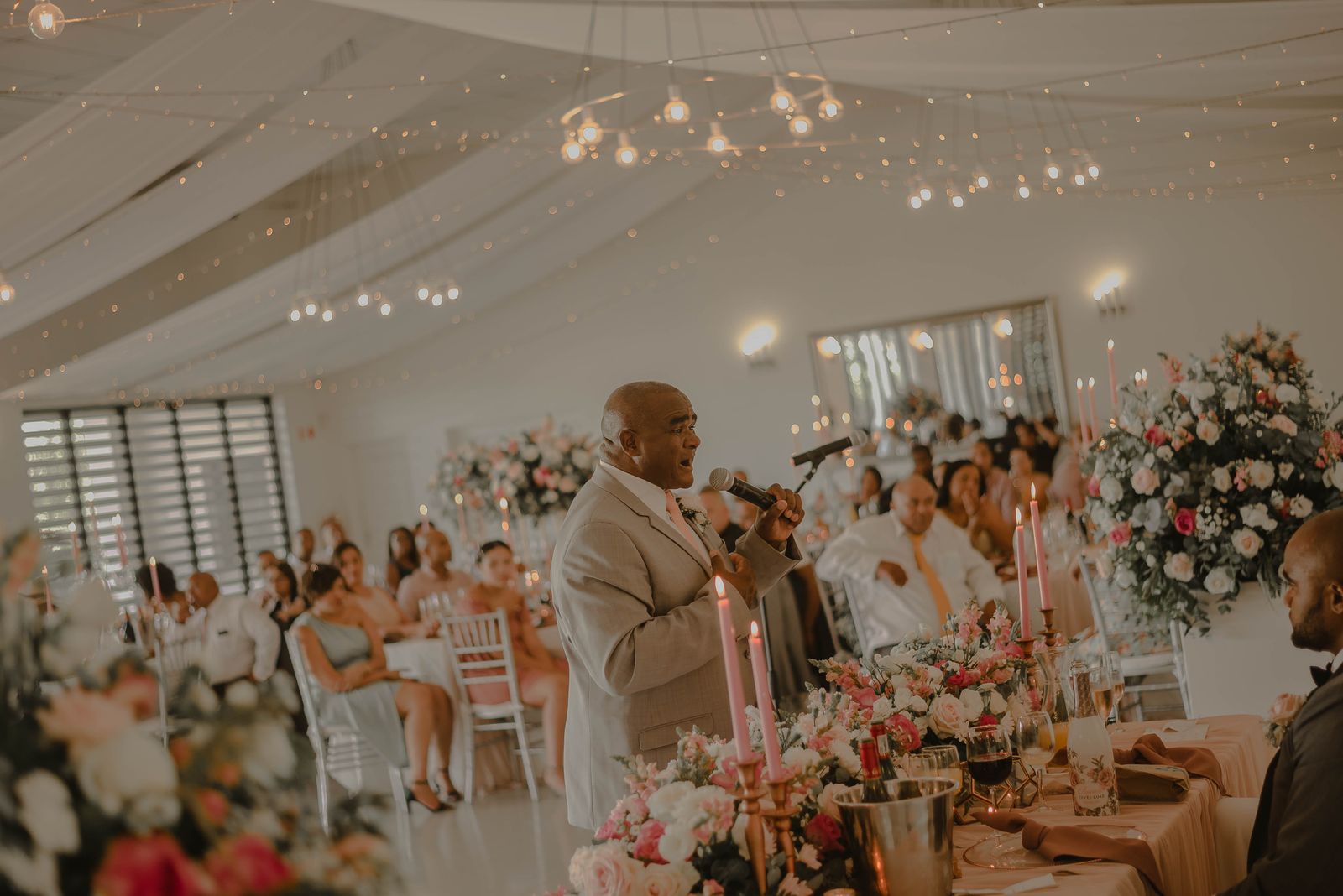
Exes, feuds and the guest nobody wants to sit beside
You do not owe anyone a seat beside a person they find upsetting. Three tactics cover nearly all of it:
- Distance, then a buffer. Put them on separate tables, and where the room is small, put a mutual friend’s table between.
- Sightlines, not just distance. Two guests at opposite ends of the room can still stare at each other across a dance floor. Check the line from their chairs.
- A word beforehand. If two people are going to be in the same room regardless, a private message that you have thought about it (“you’re at table 5 and they’re at table 9”) settles more than any layout.
An ex of the couple is a separate question, and the honest etiquette is that it depends on whether they are invited as a friend. If they are, treat them as any friend, seated among people they know, and not on the nearest table to the couple.
Singles, plus-ones and couples
Bridebook says couples should be on the same table but need not be seated side by side, and that guests who know few people should sit beside others they have something in common with. It also advises against a dedicated singles table.
Two practical additions:
- Seat a lone guest with a connection, not a mystery. “You’ll be next to Priya, who also met us through the climbing club” beats a table of strangers.
- A plus-one is a guest, not a luggage tag. Seat them as a pair unless the pair would rather separate, and make sure at least one table-mate knows the guest they came with.
Colleagues and university friends both work as a table of their own: a group that already shares in-jokes needs no chaperone. Mixed tables work best when each person has at least one natural conversation partner within easy reach.
Children, grandparents and anyone who needs a short walk
| Guest | Seat them | Because |
|---|---|---|
| Young children | With their parents, or on a nearby kids’ table with something to do | Bridebook suggests a kids’ table with activities if there are many, kept close to the adults |
| Grandparents and anyone with limited mobility | Near the top table, with a clear route to the door and the toilets | Long walks and crowded gaps between chairs are tiring |
| Guests with hearing difficulty | Away from the DJ speaker and as near the speeches as the room allows | Loud music across a table makes conversation impossible |
| Guests with access needs | Nearest to the entrance, with the chair next to them left open if a wheelchair or walker needs space | Ask beforehand rather than guess |
The one that is most often missed is the loudspeaker. Where the DJ sits, and where the band or sound system faces, decides which tables will shout through dinner. Ask the venue before you place the older guests, and read the order of the day to see when the music takes over.
Mixing the two sides without a forced mix
Bridebook recommends mixing the couple’s sides where possible and balancing outgoing and quieter guests on each table. Done well, it works. Done mechanically (one from each side, alternating), it produces a table of eight people looking politely at each other.
A reasonable middle way: keep family tables as they are, since relatives enjoy each other, and mix the friends. Put one confident talker and one good listener at every table, and let friends from different parts of your life share a table only when they already have a link, such as the same school, city or hobby.
When the plan changes in the last fortnight
It will. A guest cancels, another is ill, someone’s partner appears on the list. The hard part is not the change; it is that every printed copy is now wrong. Three habits keep it manageable:
- Fix the plan about two weeks before, and treat anything later as an exception. Tell the venue and caterer the final numbers per table at the same time.
- Keep one master list and rebuild the display from it rather than editing the poster by hand, so the table cards, the board and the caterer’s list never disagree.
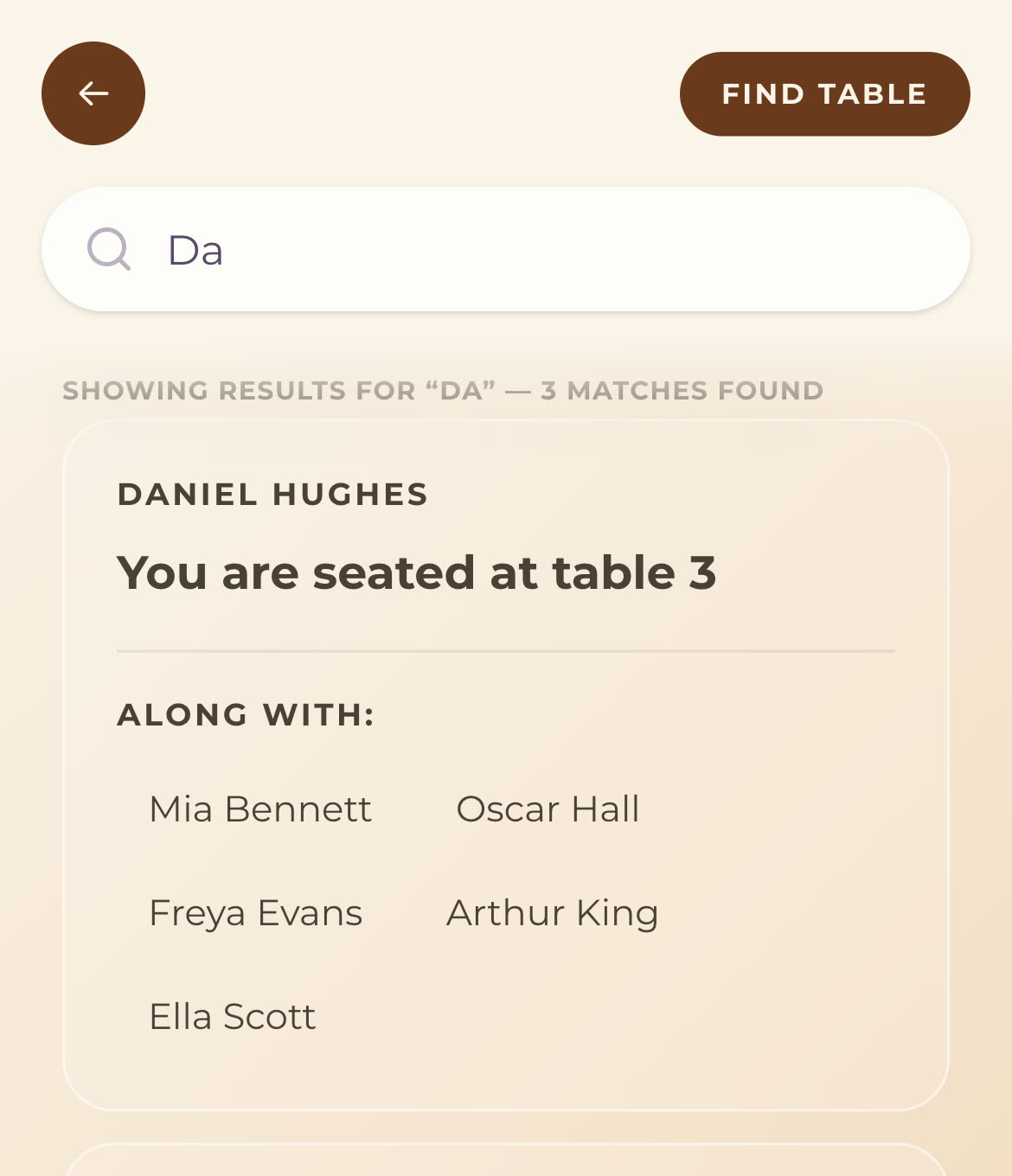
- If you use an app that lets guests search their own name, a table swap on the morning becomes an edit, not a reprint. The seating chart guide covers how names should be typed so the search finds everyone.
Checklist before you print or publish
| Check | Done when |
|---|---|
| Parents asked where they would like to sit | Each has said yes, or you have agreed a default |
| New partners placed | Every partner has a seat with someone they know |
| Feuds and exes separated | Different tables, and a checked sightline |
| Singles and plus-ones | Each lone guest has a table-mate with something in common |
| Children placed | With parents, or on a kids’ table within sight of the adults |
| Older and less mobile guests | Near the route to toilets and door, away from the speakers |
| Final numbers | Sent to the venue and caterer, matching the master list |
Quick answers
Do we need a top table? No. A sweetheart table, a family table or no top table at all are all normal.
Where do divorced parents sit? Together if they get on, otherwise at separate tables of equal prominence near the couple.
Should couples sit next to each other? On the same table, yes. Side by side is optional.
Is a singles table a good idea? No. Seat single guests among people they share something with.
Do children need their own table? Only if there are many; otherwise keep them with their parents.
When should the seating plan be final? About two weeks before, with the venue and caterer told the numbers at the same time.